Under the Hood · Part 2 · 5 min read
The genius and the desk
Why working memory, not intelligence, is the real limit.
By Aikansh ·
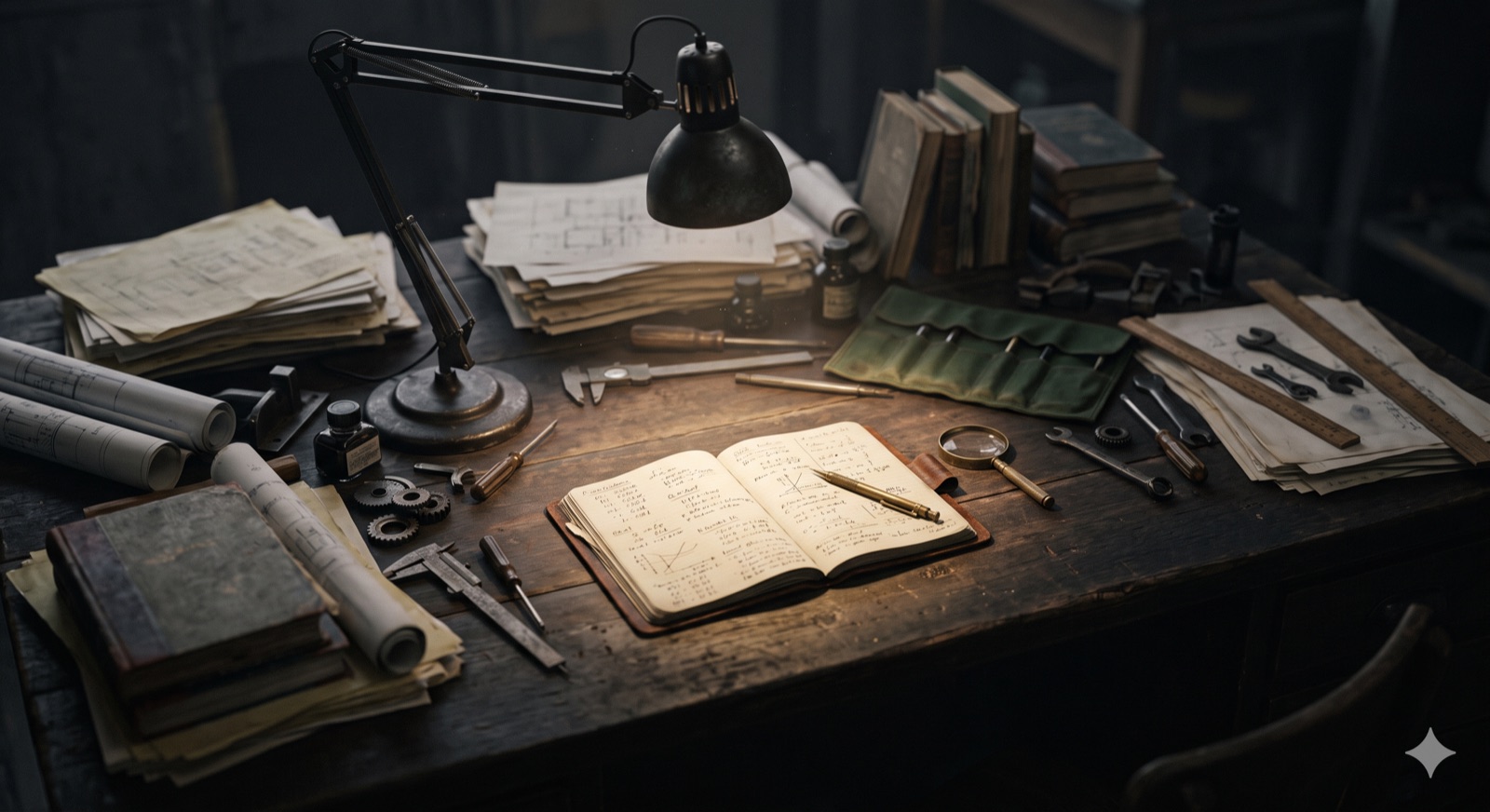
Sit a genius at a tiny desk and they will still fail. Not for lack of brains — they simply run out of room to lay the work out. That is your AI on anything long. The mind is vast, but the desk in front of it is small, and almost everything that goes wrong happens at the edge of that desk.
The model "knows" an enormous amount from its training. But to actually work on your problem, it can only use what is on the desk right now — this conversation, the documents you pasted, the thing it just looked up. That working surface has a hard edge. Engineers call it the context window. You can call it the desk.
What goes wrong at the desk
Nearly every "the AI got dumb" moment is one of three things — and none of them is the mind failing.
THREE WAYS THE DESK FAILS
- It falls off the desk. As the conversation grows, the thing you said early slides off the edge. The AI "forgot" — but really the page just dropped to the floor.
- The copy goes stale. It is reading a page on the desk that someone already changed in the filing room. The information was right when it landed; the world moved on.
- It was never pulled. The fact it needed is sitting in the cabinet, but nobody fetched it onto the desk. It is not forgetting — it never had the page at all.
Three different problems, three different fixes — and confusing them is why people throw a bigger model at a desk problem and wonder why it does not help. The real skill is humbler: desk management. Keep only what this task needs in front of it, fetch the rest on demand, and refresh anything that might have changed.
I relearn this every week building my own agents. The finance assistant I run is only as sharp as the account snapshot on its desk — hand it last quarter's numbers and it will answer, fluently and confidently, about a portfolio that no longer exists. Nothing wrong with the model. I just left a stale page on the desk.
Once you see it
Every time an assistant forgets your instruction, repeats itself, or acts on something that was true an hour ago, you are watching a desk overflow — not a mind fail. Bigger desks help: a longer context window means more can sit in front of the model at once. But a bigger desk does not decide what to put on it. That judgment — what to keep, what to fetch, what to refresh — is the actual work, and it is yours to design.
The genius was never the problem.
The desk was.
Two kinds of memory — and the one habit that fixes most of it
It helps to split "memory" in two. There's the desk — what's in front of the model right now, this conversation, this context window. It's fast, it's what the model actually reasons over, and it's small. Then there's the filing cabinet — notes, files, a saved store it can go and fetch from when it needs to. Almost every "memory" feature you've heard of is really just this: keep a good filing cabinet, and put the right page on the desk at the right moment.
Which points at the one habit that fixes most memory problems: a clean desk beats a big one. The skill was never a longer context window. It's deciding what earns a spot on the desk — and clearing the desk when it's cluttered. A long, meandering chat is a desk buried under an afternoon of paper; no wonder the model starts fumbling.
TRY IT — 2 MINUTES
Next time a long chat starts forgetting or looping, don't fight it. Do one of these and watch it get sharp again:
- Start a fresh conversation and paste a five-line summary of only what still matters. Clean desk, same genius.
- Keep a short notes.md (the filing cabinet) with the key facts, and tell the agent to read it first. Now the desk starts every session already set.
Next: the desk is set — but who's reading it? Tell the driver who to be, and the same desk yields a different answer.
FOR THE CURIOUS — WHAT'S ACTUALLY HAPPENING
The desk works in two tiers: a small, fast surface on top and a vast, slow store underneath. The context window is the surface. What sits on the desk is fast and usable but small and easily crowded out; what lives in the files, drawers, and archive room down the hall is large and durable but inert until someone walks over and pulls it up.
Retrieval just fetches the right folder onto the desk the moment you need it, instead of trying to keep everything spread out at once. And the three desk failures are simple. The paper got cleared away to make room. The copy on the desk is out of date. Or nobody ever brought it over. Name which one you are looking at and you know the fix: clear the clutter, refresh against the source, or go fetch what is missing. A bigger desk improves your odds. It never removes the need to keep the desk in order.
THE CONTEXT CHECKLIST
Before you hand the AI a long task, sort the work the way you'd lay out a desk:
- Keep on the desk — the few things this exact task needs in front of it right now. Nothing more.
- Leave in the cabinet — everything else. Put it in a file or database and fetch it only when it's needed.
- Refresh before trusting — anything that changes (prices, status, today's data). A page that was right an hour ago may be stale now.
- Summarize before it overflows — when the conversation gets long, compress what's settled into a short note so it doesn't slide off the edge.